
D.4 THE STALACTITE PHENOMENON
Acid rain seeps into the reinforced concrete structure, and thanks to the water’s acidity it dissolves part of the material, mainly calcium compounds. The water containing the dissolved calcium filters through the concrete. When it reaches the ceiling on the floor below, that calcium precipitates forming calcium carbonate, the solid compound that forms stalactites. This process is much slower in caves, and a stalactite can take thousands of years to grow just a few centimetres, while stalactites several centimetres long have formed in these galleries over just a few decades. The conditions in this construction are highly conducive to the material’s dissolution because a large quantity of acid water has been filtering through the structure for years. These seepage problems have meant a continuous presence of water with a high concentration of dissolved calcium, which drips from the surface and increases the size of the stalactites hanging from the ceiling, and even forms some stalagmites on the floor as well. Apart from the aesthetic problem, their appearance also indicates a loss of material from the floor above that could have an impact on the building’s structure.
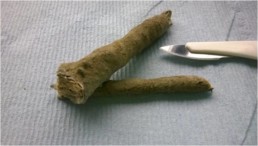
Stalactite taken from the galleries, 2015. Source: Project for showcasing the Punta Begoña Galleries
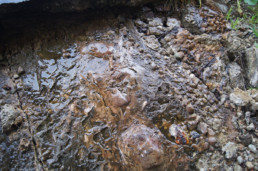
Stalagmite formations beneath the dropped ceiling in the south-west gallery, 2107. Source: Project for showcasing the Punta Begoña Galleries