
D.15 BRICKS TURN TO DUST
The bricks used on modern buildings are generally made of clay mixed with water. The mix is then moulded and the bricks are air-dried and fired at high temperatures in a kiln to produce the end product. A brick undergoes a series of changes during firing that depend on the original composition, the temperature in the kiln, the heating ramp, baking time, and a series of reactions that define the brick’s mineral composition and microstructure, which are the most important characteristics for preserving their durability.
Many of the bricks in the galleries are damaged and have crumbled, so we have analysed several samples.
The analyses conducted with XRF and x-ray diffraction have revealed the presence of sodium chloride, confirming the part sea spray has played in the bricks’ deterioration. We have also found calcium sulphate, as gypsum, which is a compound that degrades bricks. The areas most affected by the sulphates are in the south-west gallery, where gypsum has been found in more of the samples analysed. In addition, we have noted the absence of calcium silicates in the bricks, which suggests a high level of damage, as they are the bricks’ original components.
The clays or sands used to make bricks sometimes contain carbonates and/or organic matter. The original carbonates may be broken down into calcium oxides, which may in turn become calcium hydroxides due to the humidity in the air and undergo a subsequent process of carbonation that leads to calcium carbonates. In turn, the carbonate may react with the sulphates leached by the infiltrating water or with the atmospheric SOx to form new sulphate salts, which are much more soluble than the original carbonate, triggering a loss of material in the bricks.
Generally speaking, it is not only the atmosphere around the bricks (sea spray, infiltrations, impact of SOx, metal deposits, etc.) that has had an influence of their current condition at the Punta Begoña Galleries. The high presence of calcium carbonate detected in the bricks may well be due to the high concentration of carbonates in the original clays used to make the bricks used on the galleries.
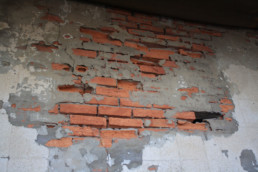
Example of weathering on the bricks in the north-west gallery, 2016. Source: Project for showcasing the Punta Begoña Galleries