
B.6 TAKING SAMPLES TO ANALYSE THE SOIL IN THE GARDENS
When considering the conservation of the Punta Begoña Galleries, we need to learn the composition of other nearby materials that may entail risks or cause damage to them. That includes the soil in the adjacent area. The soil of the gardens above forms the roof of the structure. Certain compounds in it may dissolve and give rise to problems.
We divided the garden into 21 plots measuring approximately 10 m by 20 m, and took samples in each one at depths ranging from surface level to 10 cm down. What we found led us to extend our analysis of the soil in the garden to different depths, because it is made up of not only local natural soil but also filler material. There are no records of how that filler is distributed across the site. During our archaeological explorations we took samples at various depths, in sections 10 cm deep, largely coinciding with layers of different types of soil, until what is thought to be the natural soil of the area was reached.
The amount of non-natural filler material found decreased as we dug deeper. In some spots there was 10 times less material of this kind.
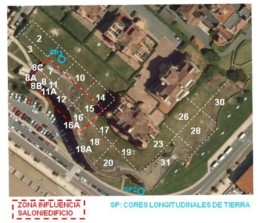
Layout of the 21 plots into which the garden was divided. Source: Project for showcasing the Punta Begoña Galleries
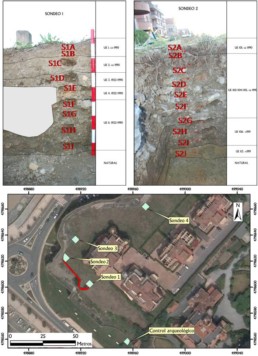
Location of sampling points and vertical cuts in sampling processes 1 and 2. Source: Project for showcasing the Punta Begoña Galleries